
As I got ready for my trip to Iceland, I headed straight to my local REI, and they truly knew how to help me gear up for the elements. Since then, whenever I mention Iceland, people ask, "What should I pack?" I give them the exact breakdown below. Granted, I visited in late February and early March, but the amazing thing about Iceland is that a good winter packing strategy works all year; you just adjust a few pieces for summer.
Let's dive into packing like a pro so you can enjoy every waterfall, glacier, and hot spring.
Golden Rule #1: Master the Art of Layering
Layers are your best friend in Iceland, whether it’s February or July. Weather on the island changes in a split second. Outdoor veterans live by the saying "cotton kills" because cotton traps moisture against your skin and freezes you out when the wind picks up. Instead, rely on merino wool or performance synthetics.
Understanding how to layer comes down to giving every piece a specific job:
Base Layer (The Moisture-Wicker): Wears directly against your skin to pull sweat away from your body.
Middle Layer (The Insulator): Traps and retains your natural body heat (think cozy fleeces or packable down).
Outer Layer (The Shield): Blocks out howling winds and heavy precipitation.
Even if you step outside in the morning not wearing all three, always toss them in your daypack. You can peel off a layer if the sun comes out, but you can't put on what you left back at the hotel!
Golden Rule #2: Invest in Real Waterproof Gear for Iceland (Jackets, Pants, and Rain Shells)
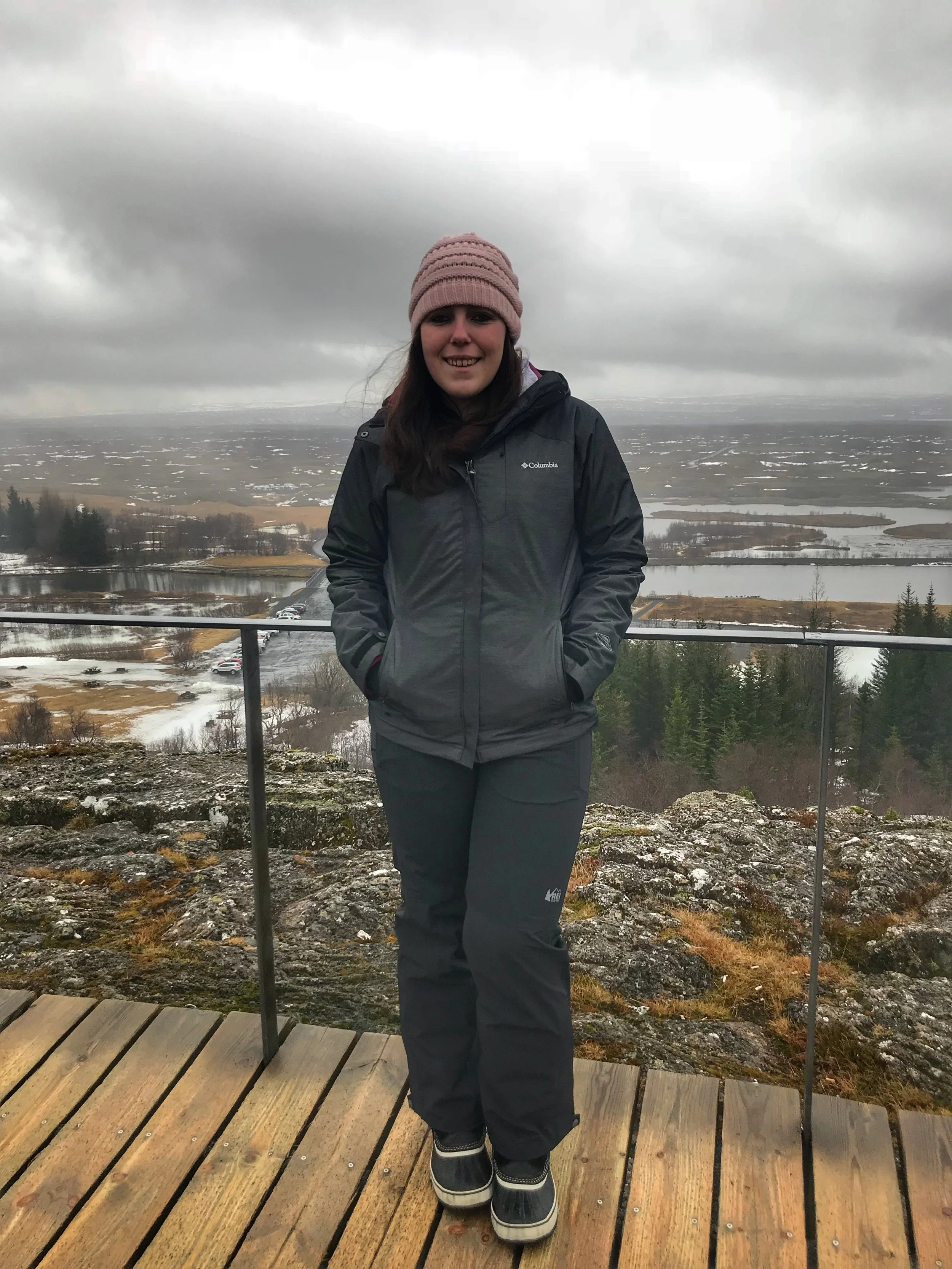
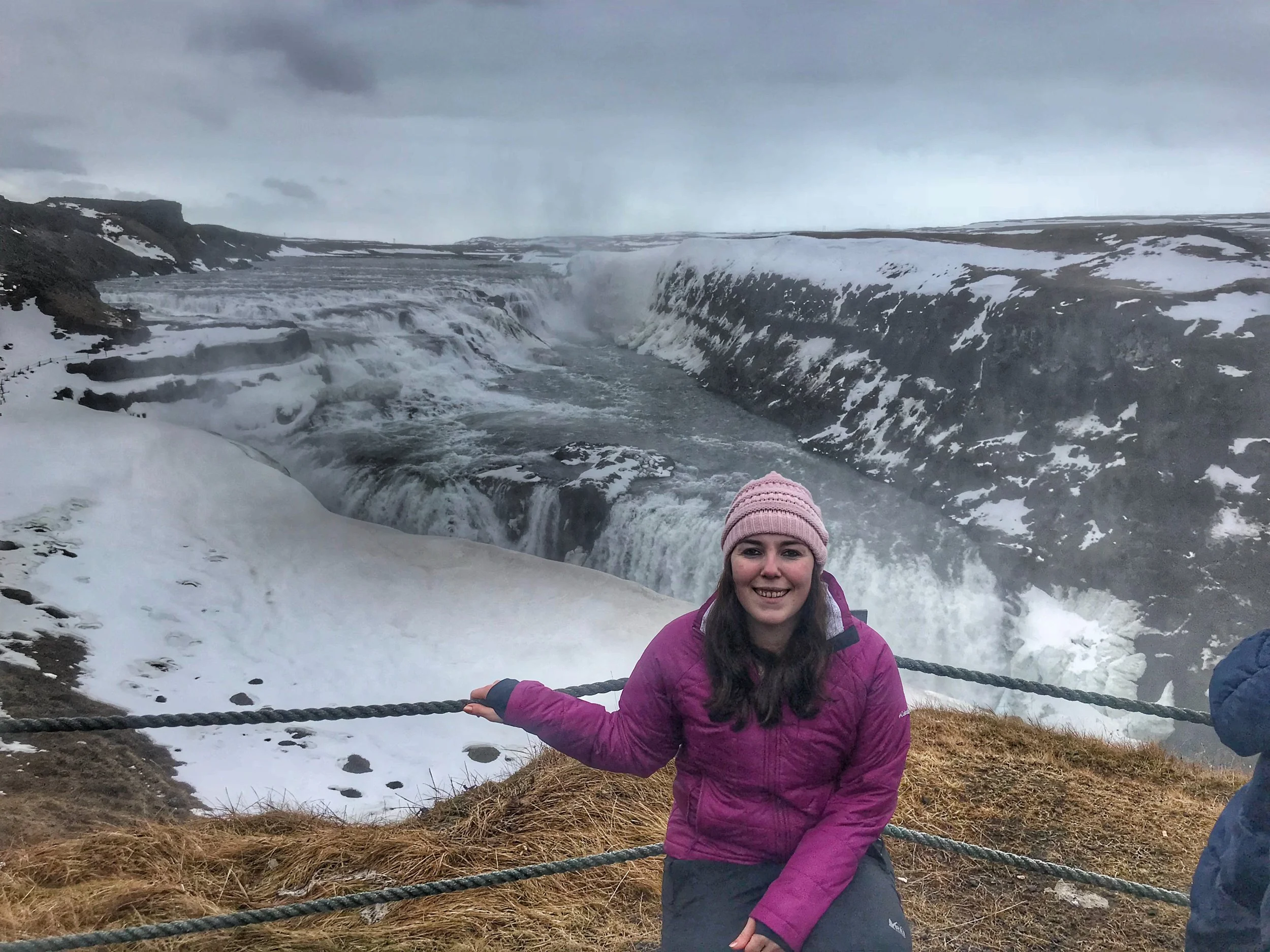
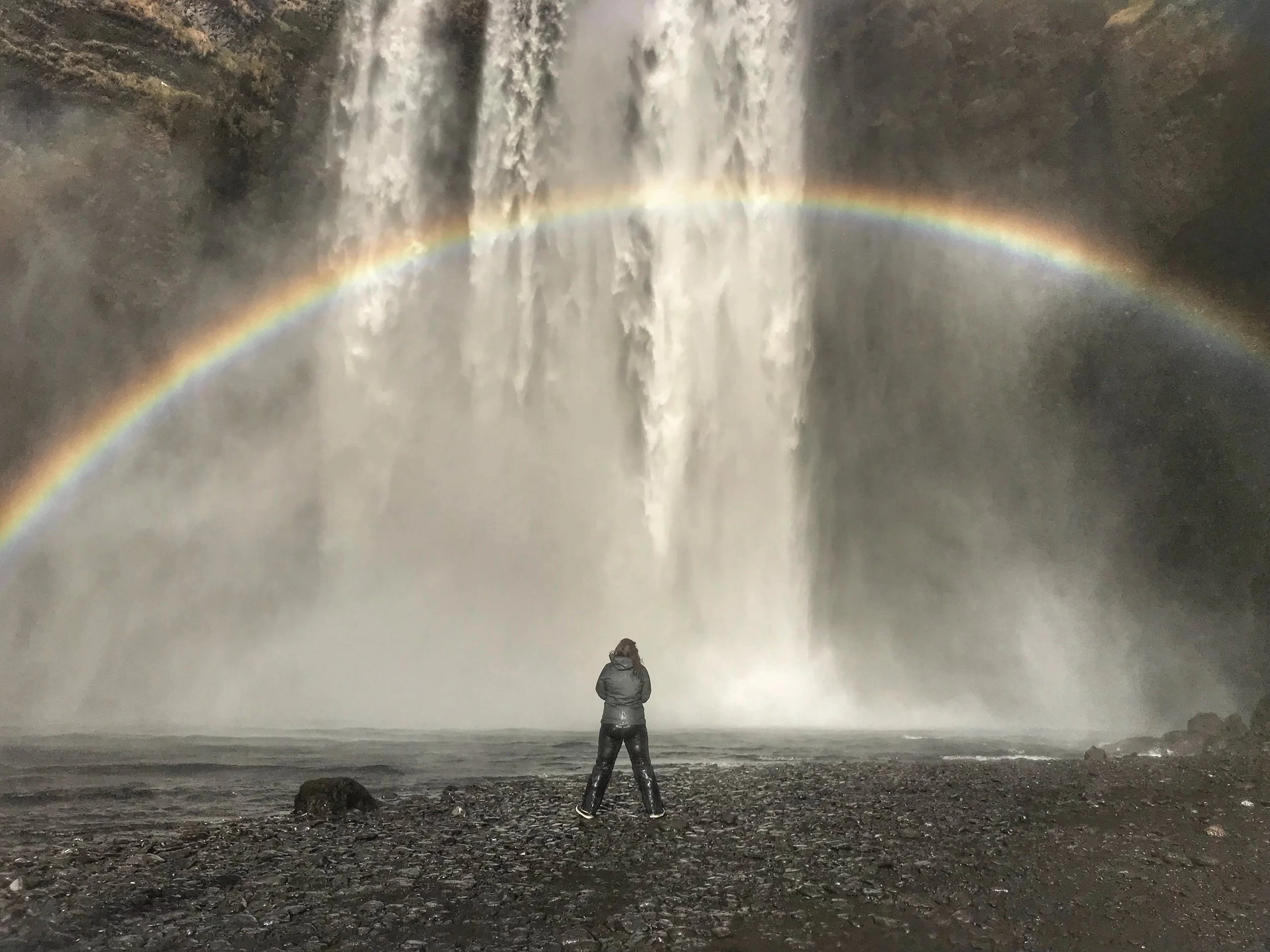
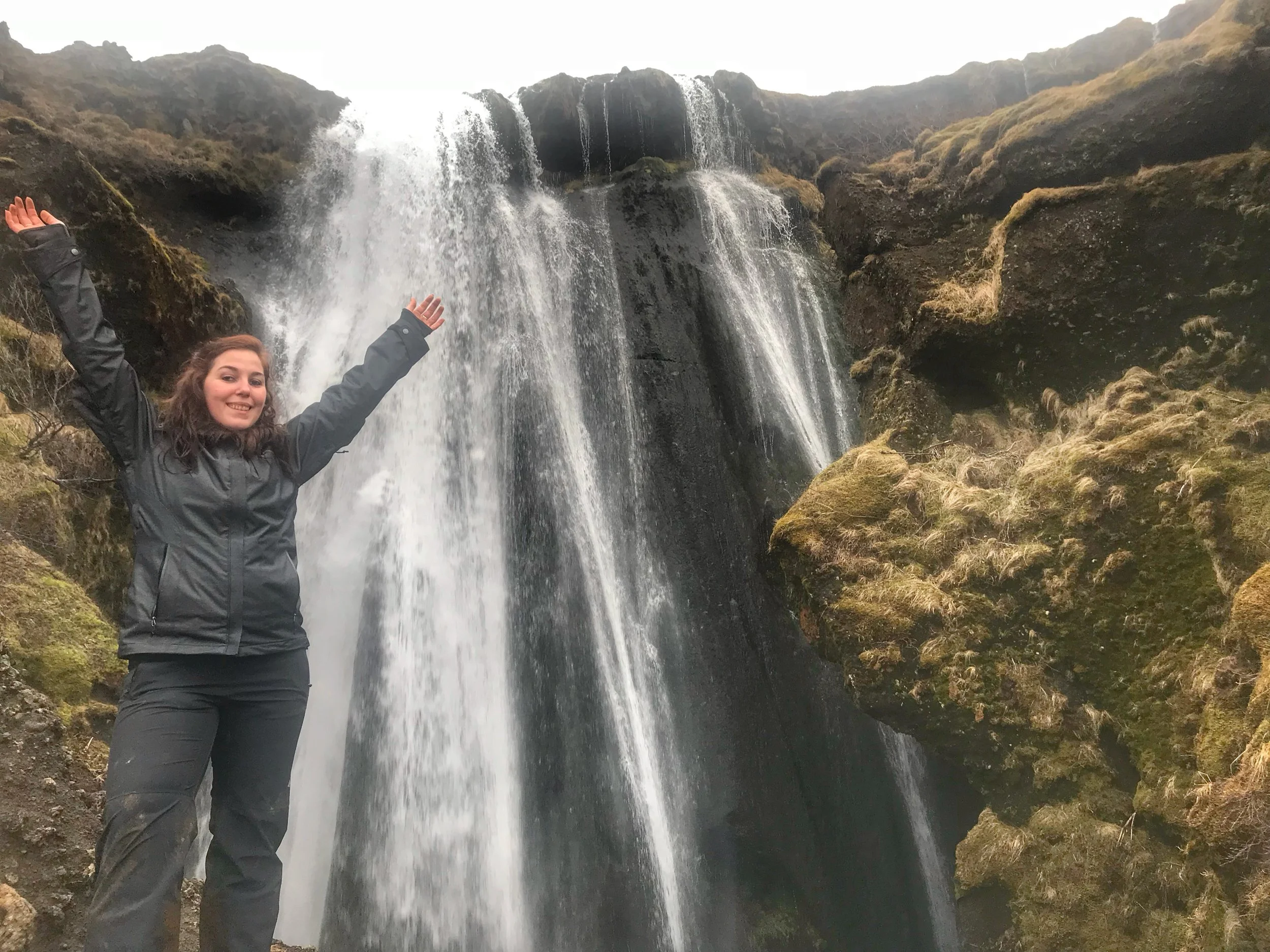
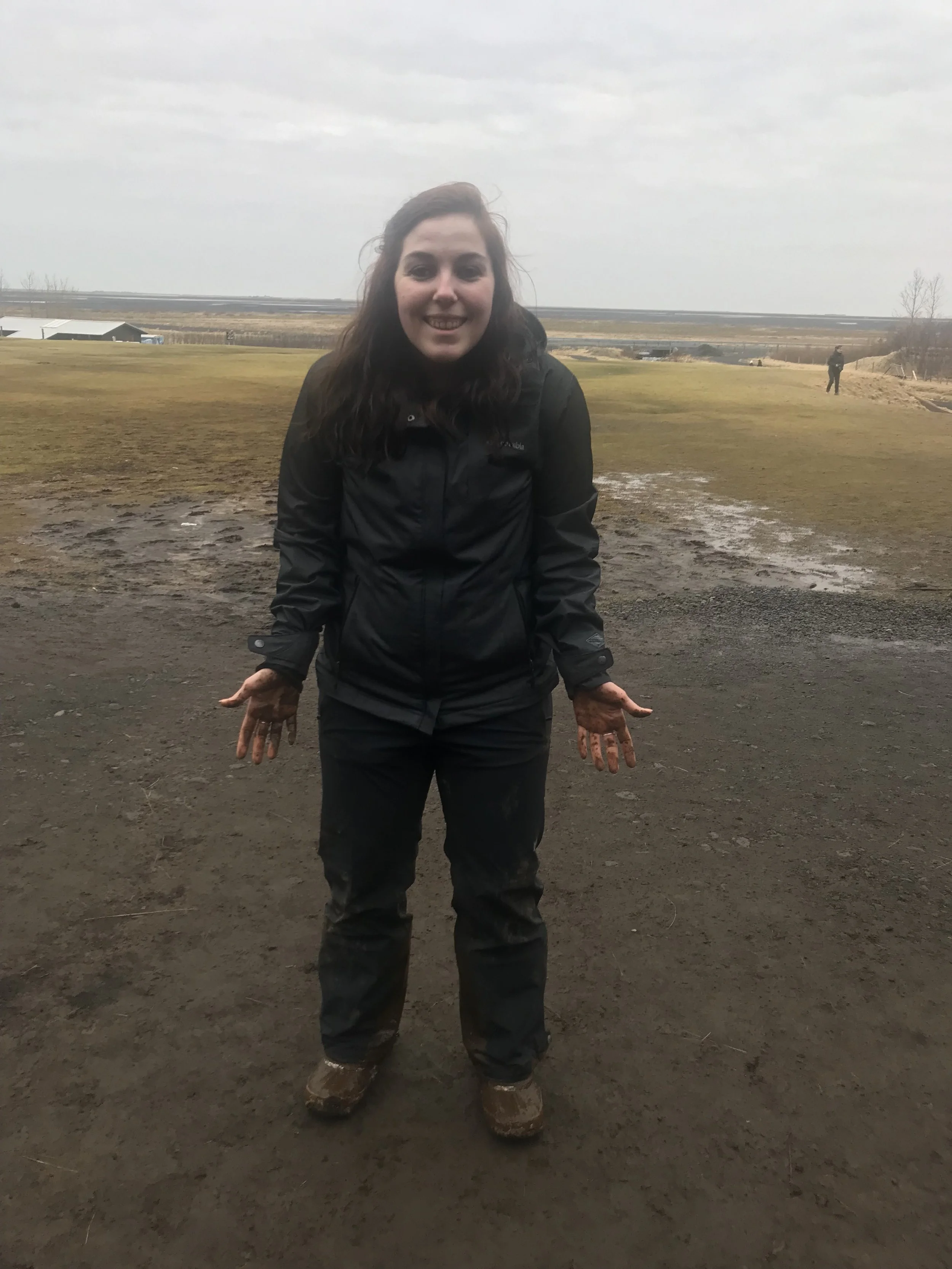
Whatever season you choose, proper waterproof pants and a high-performance jacket are mandatory. Water-resistant won't cut it when you're standing next to thunderous waterfalls like Gullfoss. Trust me. I was soaked on the outside, but because I layered and had real waterproof gear, I stayed dry inside!
When shopping for rain shells, you will see jackets categorized by how they are built. Here is the breakdown so you know what to look for:
1. 2-Layer Construction (Best for Casual & Urban Use)
How it's built: The membrane or coating is applied inside an outer fabric layer to form a single piece of material, with a loose-hanging liner added inside for protection.
Why pick it: It is the quietest design (less "swishy" as you walk) and generally found in moderately priced jackets ideal for urban and travel rainwear.
2. 2.5-Layer Construction (Best for Lightweight Packing)
How it's built: Features an outer fabric as its first layer, a polyurethane laminate or coating inside as its second layer, and a thin protective print (a "half layer") laid over that.
Why pick it: It is lightweight, flexible, packable, and more affordable. Ideal for active pursuits where weight savings matter, though dry-touch prints help avoid any clammy feel.
3. 3-Layer Construction (The Gold Standard for Iceland)
How it's built: No coatings are used here; a waterproof membrane is tightly sandwiched between a rugged face fabric and an inner liner.
Why choose it: It provides superior durability and breathability for the toughest backcountry conditions. Although it comes at a premium cost, it guarantees full protection against Iceland's unpredictable weather. This is the top choice for Iceland; it's expensive, but you'll stay dry and comfortable.
Seasonal Packing Lists: Summer vs. Winter
Now that you have the layering basics down, let’s talk about how your suitcase changes depending on when you actually board that flight to Keflavík!
Summer Packing List (June – August)
Summer in Iceland is a dream—the temperatures sit around a mild 50°F–60°F (10°C–15°C), and the sun practically never sets.
Eye Mask / Sleep Mask: The 24-hour Midnight Sun is incredible for late-night sightseeing, but it will trick your brain into staying awake. A thick sleep mask is non-negotiable for getting actual rest.
Polarized Sunglasses: Bright daylight reflecting off glaciers, black sand beaches, and wet asphalt will make you squint all day long.
Light Fleece or Packable Down: You’ll want an insulating mid-layer you can easily stuff into your daypack when climbing up waterfall paths and pull out when the ocean breeze hits.
Lightweight Thermal Top: Great for chilly mornings, boat tours, or glacier hikes.
Bug Net / Insect Spray: If you plan on visiting Lake Mývatn or damp inland hiking trails, the summer midges can be relentless.
Winter Packing List (November – March)
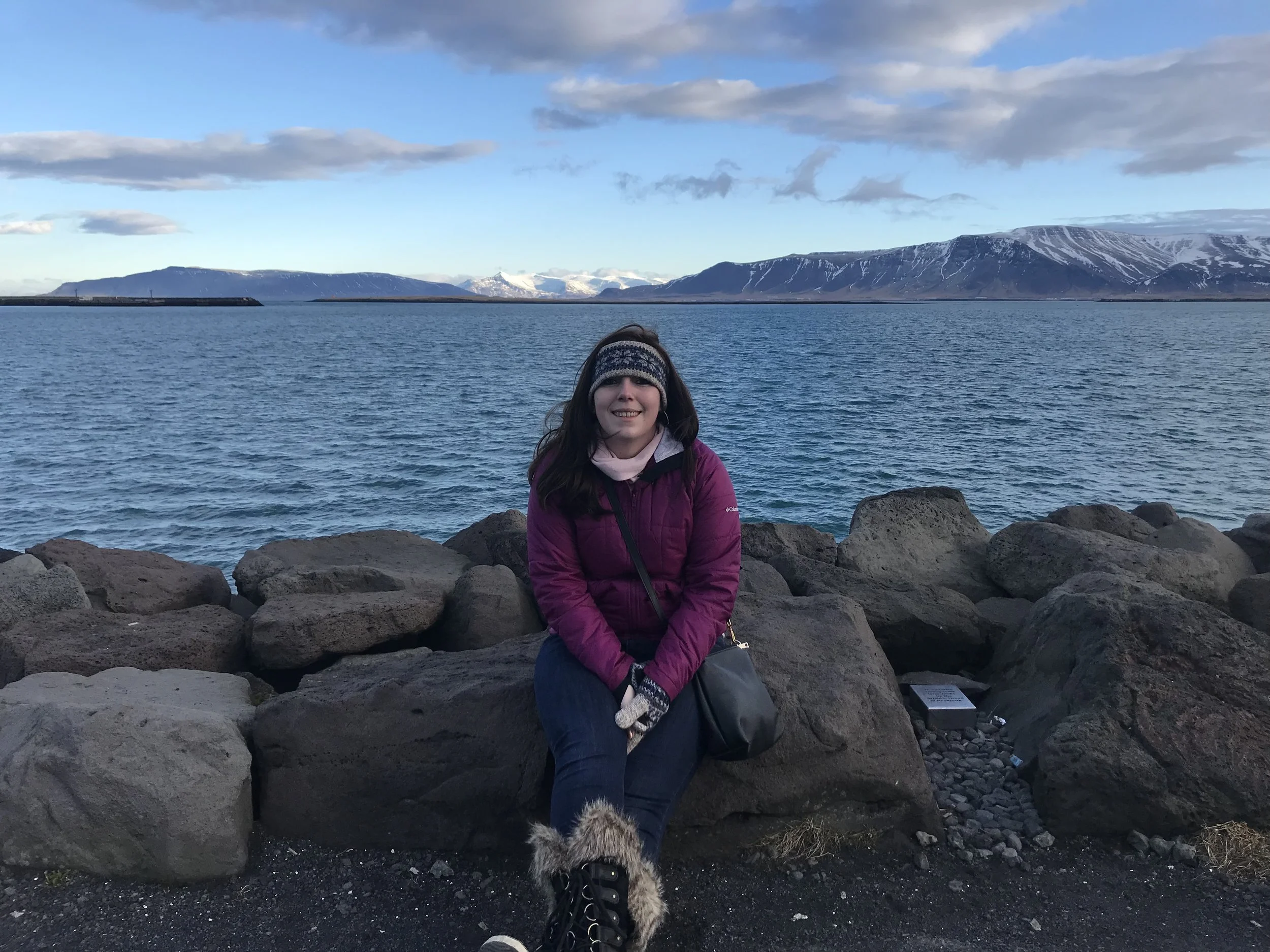
Winter brings long, cozy nights, dancing Northern Lights, and stunning snowscapes. Temperatures hover around 30°F–35°F (-1°C–2°C), but the biting wind chill makes it feel much colder.
Heavy Insulated Parka: Choose a long, windproof, waterproof winter coat with a hood that covers your hips.
Thermal Base Layers (Top & Bottom): Bring 2–3 sets of merino wool long johns. You’ll wear these under your regular pants and sweaters every day.
Fleece-Lined Pants / Ski Pants: Waterproof, insulated pants are a lifesaver when you’re standing outside in freezing temperatures waiting for the Northern Lights.
Ice Cleats (Microspikes): City streets in Reykjavík and footpaths around waterfalls like Seljalandsfoss get sheeted in pure ice. Slip-on rubber spikes for your boots will keep you from wiping out!
Winter Accessories:
Fleece-Lined Beanie: Make sure it fits tightly so the wind doesn't blow it away.
Thermal Neck Gaiter / Buff: Much safer and warmer than a trailing scarf that flaps around in high winds.
Waterproof, Insulated Gloves: Ski mittens or lined waterproof gloves work best.
Hand & Foot Warmers: Toss a few chemical heat packs into your pockets for late-night Aurora hunts!
Year-Round Essentials
No matter what month you go, make sure these items are at the very top of your suitcase:
Sturdy, Waterproof Hiking Boots: High ankle support is crucial for walking across jagged lava fields and muddy trails.
Swimsuit & Quick-Dry Towel: Needed for hot springs like the Blue Lagoon or local public geothermal pools.
Merino Wool Socks: 3–4 pairs of thick wool socks keep your feet warm even if moisture sneaks in.
Reusable Water Bottle: Icelandic tap water is pristine glacial runoff; bring a bottle to refill for free everywhere.
High-Capacity Power Bank: Cold air drains phone and camera batteries twice as fast, so keep a charger handy.
Remember to layer your clothing wisely, bring trusty waterproof gear, and keep an eye on the weather. With these tips, you're ready to take on Iceland's waterfalls, glaciers, and Northern Lights—warm, dry, and stress-free!